


If you run plumbing, electrical, HVAC, or another home service trade, SEO is not optional. You either own the map pack and the local AI recommendation in your service area, or you buy leads. This is the playbook NextLeft uses in 2026 and 2027 for private equity-backed home service franchises and single-location, privately owned operators: rank for “near me,” win the neighborhood, and become the answer when homeowners ask ChatGPT, Gemini, or Perplexity who to call.
Understanding Home Services SEO
Whether you are opening a new shop or scaling a multi-location brand, Home Services SEO is how you get found by people who can actually book you. A generic national strategy will put your name in front of searchers you cannot serve. Home Services SEO narrows the field to your service area, your trades, and the neighborhoods that produce booked jobs.
Defining Home Services SEO: The Essentials
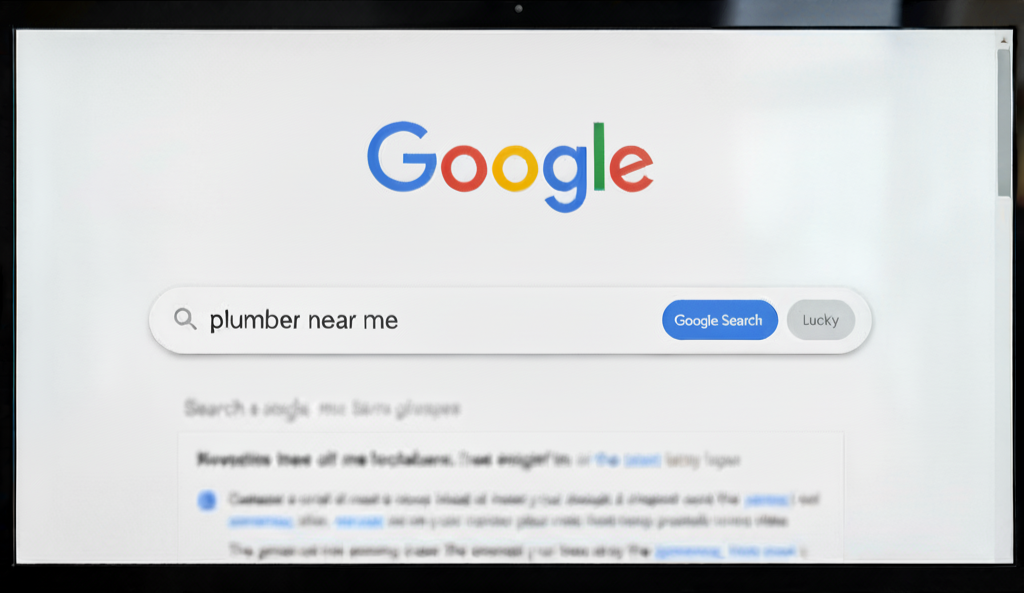
Home Services SEO is the process of optimizing a service-based business website, such as plumbing, HVAC, electrical, roofing, or pest control, to rank in local search results when customers look for immediate help. Unlike traditional SEO, which often targets broad informational queries, Home Services SEO emphasizes local intent (e.g., “emergency plumber near me”) and service immediacy.
That work concentrates on location-based keywords, Google Business Profile (GBP) optimization, review velocity, and the neighborhood-level proof that AI answers now cite. These customers are ready to book. Targeting the right keywords and local intent is how you fill the board with jobs you can actually run, not impressions from 40 miles outside your radius.
NextLeft builds this for home service brands at both ends of the market: PE-backed franchise systems that need repeatable local playbooks, and independently owned shops that need to beat the franchise down the street. The essentials below are the foundation. The rest of this guide is how you stay #1 through 2027.
Key Differences Between Home Services SEO and General SEO
General search engine optimization can get your company’s name and information into search results, but you need more detail and location accuracy to make the most of being found by searchers. Think of Home Services SEO as local SEO for contractors, where your plumbing, HVAC, or other service business can narrow down your targeted customers.
That gives you more efficient SEO right from the beginning, and helps you convert searchers into customers. After all, being found in search really only matters if the person finding you is someone who needs your services. If you don’t offer what they’re looking for, or you’re located too far away, they’ll just move on to the next result.
Here are the biggest factors to consider and how general vs. Home Services SEO compare:
| Factor | General SEO | Home Services SEO |
|---|---|---|
| Geographic Focus | National or global reach | Hyper-local, service-area and neighborhood specific |
| Search Intent | Research-driven, long-term buying cycles | Urgent, service-based, immediate need |
| Keywords | Broad, informational | “Near me,” city + service, emergency terms, neighborhood names |
| Reviews & Reputation | Helpful but secondary | Critical for trust, ranking, conversion, and AI citations |
| AI / Answer Engines | Brand-level thought leadership | Local AEO: get named as the neighborhood recommendation |
| Content Strategy | Blogs, thought leadership, evergreen guides | Service pages, local landing pages, community FAQs |
| Conversion Drivers | eBooks, demos, forms | Phone calls, booking buttons, click-to-call |
General SEO options may work well for a company that has a wide reach, but if you’re targeting HVAC SEO in your small town you want to make sure locals are finding you. Ideally, they should locate you before your competitors, especially if your SEO is focused on emergency services. Most people with a service-based emergency will call the first company they can find with online visibility that’s local to them, and you want that company to be yours.
The Importance of SEO for Home Service Providers
Local SEO for contractors is an excellent way to get more people looking at what you have to offer, and ensure the vast majority of those people are in your local service area. With that in mind, there are three main areas where local SEO can be essential for service businesses.
1. Drives Targeted Traffic to Your Website
Approximately 75% of people who search for a local service visit that business within 24 hours, and 28% of those searches result in a purchase. You want to get people looking at your website as quickly as possible, but you also want to ensure they’re in your local service area, so you aren’t wasting your marketing efforts on people who you can’t assist due to their location.
SEO also cuts dependence on purchased leads. Average SEO cost-per-lead is over 60% lower than paid ads. A plumber in the top three map pack results can see 300 to 500% more traffic than the same company buried on page two. That gap is the difference between owning demand and renting it.
2. Enhances Local Visibility and Brand Recognition
With over 45% of all Google searches being local, appearing in the Google Map Pack can triple your brand recognition compared to organic-only results. In 2026 and 2027, that visibility also feeds AI Overviews and local AI search answers. Customers are much more likely to remember a service provider they repeatedly see when searching, too, so you want to make sure they see your name again and again. That helps create top of mind awareness, so potential customers come back to you when they need the services you have to offer.
3. Boosts Customer Trust and Credibility
More than 85% of consumers read online reviews for local businesses. Companies with 4+ star ratings convert 270% better than those with three stars or fewer. Higher rankings read as credibility, and credibility is what turns a map-pack impression into a booked job. Stronger reviews then feed the next ranking cycle.

Local AI Search and Answer Engine Optimization (AEO)
By 2026, a growing share of “who should I call” questions never hit a traditional blue-link results page. Homeowners ask ChatGPT, Gemini, Perplexity, and Google’s AI Mode for a plumber in their zip code, an HVAC company that can come today, or “the electrician neighbors actually use.” Answer Engine Optimization (AEO) for local AI search is how you become that named recommendation instead of a generic “search nearby contractors” shrug.
Local AEO is not a separate campaign from Home Services SEO. It is the same work, written so machines can cite it. Clear service + city + neighborhood pages, FAQ answers in natural language, current GBP data, recent reviews, and community proof (sponsorships, Nextdoor presence, neighborhood project write-ups) are what AI systems reuse when they recommend a local pro.
What to do in 2026–2027: write FAQs the way a neighbor would ask them, keep NAP and hours identical everywhere, publish hyper-local pages that name real streets and communities you serve, and treat review velocity as a ranking and citation signal. If an AI assistant cannot tell where you work and that people still hire you, it will not put you in the answer.
Emergency vs. Planned Service Searches: Two Strategies You Need
Knowing your customers is crucial for business success. While you have to ensure you’re targeting people in your local service area, you also need to understand the different types of customers you can help. Then, you can create campaigns that speak to what they need, so they’ll feel confident in your ability to help them solve their concerns.
Persona 1: Emergency Emma
This customer will have a serious issue they need to handle quickly, such as a pipe that bursts at midnight. They’ll be looking for someone to help right away, and their search behavior will generally include voice searches, mobile-first, phrases like “emergency plumber near me” or “24/7 plumbing service [city].” In 2026 they may also ask an AI assistant, “Who can come out tonight in [neighborhood]?” They want immediate booking, click-to-call options, and trust signals like reviews and license information where it’s easy to find.
Their customer journey map may look like this: Problem → “Near me” or AI ask → Quick click → Calls provider → Books instantly.
Persona 2: Planner Pete
For this customer, the goal will be something like annual HVAC maintenance or a scheduled roof inspection. Their search behavior will be much different from a customer looking for emergency help, and you can expect that behavior to be desktop-heavy, include comparison shopping, and have queries like “best HVAC maintenance plan [city].” They’ll be expecting detailed service pages, pricing transparency, and financing options, plus recent reviews that prove you still show up on time.
They need a customer journey map with this basic pattern: Research → Compare providers → Read reviews / ask AI → Visit website → Request estimate → Book appointment.
Understand Search Intent to Align Content with Local Demand
Search intent and local demand need to come together for your Home Services SEO campaigns to be successful. That’s where finding the right intent comes in, so you can feel confident that the right people are finding what they need from you quickly and efficiently. The same intent clusters now feed both Google and local AI search answers.
The 4 Search Intent Types for Home Services
The four main types of intent for Home Services include information, navigation, transactions, and commercial, and they’re all vital ways to locate customers.
- Informational: “How to unclog drain [city],” “signs you need furnace repair”
- Navigational: “ABC Plumbing [city],” “[company name] reviews”
- Transactional: “Emergency plumber near me,” “book HVAC repair online”
- Commercial: “Best electrician [city],” “roof repair cost [location]”
Content Clusters Framework
Not only do you need to align your content with search intent, but you also need to make sure customers who find your site can navigate through the questions they have to find what they want to know. That’s where proper content clusters matter, and they may look something like this:
- Hub Page: Plumbing services
- Cluster Pages: Emergency plumbing, drain cleaning, water heater repair
- Neighborhood Pages: “Plumbing services in [neighborhood]” (community-based hyper-local, not just city-level)
- Internal Links: Hub ↔ Cluster ↔ Local pages
Keyword Research Strategies for Home Services SEO
Finding and using relevant keywords is an essential part of your Home Services SEO strategy. It’s crucial to identify the keywords you want to use, and you’ll need the right tools for analyzing your options. In 2026–2027, also mine the questions people ask AI assistants: “Who is the most reliable [service] in [neighborhood]?” often maps to a long-tail page you should already own.
Identifying High-Value Keywords
Some of the ways to identify high-value keywords include addressing different types of searches for similar subjects. In other words, consider that some potential customers will be looking for location-specific information overall, while others might be looking for seasonal options or emergency help in their local area. That means identifying keyword options such as:
- Service + Location: “Plumber San Diego” (10k–30k monthly searches, high competition)
- “Near Me” Searches: “Electrician near me” (20k–50k, high)
- Emergency Keywords: “24/7 HVAC repair” (1k–5k, medium)
- Service-Specific: “Tankless water heater installation [city]” (500–2k, medium-low)
- Long-Tail Variations: “Affordable pest control [neighborhood]” (100–500, low)
- Seasonal Keywords: “AC tune-up special [city]” (variable, medium)
- Comparison Keywords: “Best roofing company [city]” (1k–3k, medium)
- AI / AEO questions: “Who do neighbors recommend for [service] in [neighborhood]”
Tools for Effective Keyword Analysis
To effectively analyze keywords, there are multiple tools you can use, including:
- SEMrush: Competitive insights, keyword gaps
- Ahrefs: Backlink + keyword difficulty analysis
- Google Keyword Planner: Search volume and CPC
- Ubersuggest: Budget-friendly, good for local insights
The process for analyzing keywords and finding the ones that meet your company’s needs might look something like this:
- Seed keyword → location modifiers → expand with “near me” and neighborhood names
- Check volume/difficulty in SEMrush
- Validate with Google autocomplete, People Also Ask, and common AI prompts
- Prioritize high-intent, local, and hyper-local keywords
Long-Tail Keywords (Examples)
Examples of long-tail keywords (which are essentially keyword phrases that include the local area), could be options such as:
- “Emergency electrician downtown Chicago”
- “Affordable AC repair in Dallas suburbs”
- “Eco-friendly pest control Miami Beach”
- “Weekend plumber open Sunday Phoenix”
- “Licensed roofer near Lincoln Park Chicago”
- “Same-day water heater repair Austin”
- “Best HVAC financing options Orlando”
- “Furnace tune-up cost Salt Lake City”
The benefit of long-tail queries is that they convert two to three times higher due to their specific intent and lower competition. When you can find keywords with low competition you can typically rank higher for them quickly. That will help you get found by customers, but high-competition keywords are also still vital for showing up in frequent searches. Hyper-local neighborhood phrases are also the language AI answers prefer when they name a specific company.
Optimizing Your Google Business Profile
Your Google Business Profile is still the single most important local listing in 2026 and 2027. It fuels the map pack, Google’s AI Overviews, and a large share of what ChatGPT, Gemini, and Perplexity reuse when they recommend a local contractor. The more you keep your profile complete, current, and active, the more easily searchers (and answer engines) will locate your company.
Essential Elements Checklist
- Business name (exact match)
- Full address
- Phone number (click-to-call)
- Website link
- Service areas
- Business hours (include holidays)
- Photos (team, jobs, vehicles)
- Services list
- Posts (special offers, seasonal tips, neighborhood job recaps)
- Questions & Answers
- License info
- Booking link
Review Generation Strategies
Reviews are another important way to get noticed, and you want to encourage every customer to leave a review. Some of the best strategies to generate reviews include sending SMS/email follow-ups and putting QR codes on your invoices. Additionally, you can use review request cards and post-job thank-you emails, along with incentives such as discounts on upcoming services (never pay for a review itself). By automating these strategies via CRM you can get more reviews without a lot of extra effort.
Response templates for reviews should include positive and negative review options, but they don’t have to be complicated. Consider templates such as:
- Positive: “Thanks, [Name]! We’re glad we fixed your [problem]. Call us anytime.”
- Negative: “Sorry we missed the mark, [Name]. Please call us at [phone]. We’d like to make this right.”
Review Schema & Rich Snippets
Implementing structured data markup helps Google understand and display your business information more effectively in search results. Add LocalBusiness schema to your homepage, Service schema to individual service pages, and AggregateRating markup when you have legitimate reviews. This can help your listings stand out with star ratings and additional business details directly in search results, and it gives AI systems cleaner facts to cite.
Always ensure your schema markup reflects real data. Sync rating values with your actual Google Business Profile and review platform scores rather than fabricating numbers. Use Google’s Rich Results Test tool to validate your markup and monitor Google Search Console for enhancement opportunities that could improve your search appearance.
NAP Consistency
NAP (Name, Address, Phone) can cause issues that stop you from getting found. Common mistakes in NAP include using tracking numbers inconsistently, wrong abbreviations (“St.” vs “Street”), and old addresses left online.
When you’re auditing your company’s NAP, make sure you check Google, Yelp, BBB, Angi, Facebook, Yellow Pages, Nextdoor, Apple Maps, Bing, Thumbtack, Houzz, Chamber of Commerce, and more. Inconsistent NAP is also one of the fastest ways to get dropped from a local AI recommendation.
GBP Review Velocity and Responding to Reviews
A big review count from 2022 does not win 2026. Google Business Profile (and the AI answers that read it) weigh review velocity: a steady stream of recent, real reviews from the neighborhoods you serve. Ten new five-star reviews this quarter usually beat 200 untouched reviews from three years ago.
Set a simple velocity target: enough new GBP reviews each month that your profile never looks stale. For most home service companies that is 5 to 15 fresh reviews a month, with more during peak season. Ask after every completed job, not only the raving ones. Spread requests across the week so you are not dumping 20 reviews on a Monday and going silent for six weeks.
Responding matters as much as collecting. Reply to every review, good and bad, ideally within 24 to 48 hours. A public reply tells the next homeowner (and the model summarizing your profile) that a real operator is still on the other end. Keep replies specific: name the service, the neighborhood if they mentioned it, and a next step. Never argue in public. Take complaints offline, then update the thread when you’ve made it right.
What to avoid: review gating that only sends happy customers to Google, copied templates with no job detail, and letting one-star reviews sit unanswered. Those patterns hurt map-pack trust, conversion, and local AEO citations heading into 2027.
On-Page SEO: Fine-Tuning Your Website
When you’re ready to dial in your website and make it as SEO-friendly as possible, simplifying and clarifying are the goals. The same clarity helps answer engines extract a clean recommendation.
SEO-Friendly URLs & Navigation
Your URL should make sense for the search, with a good URL looking like this: yourcompany.com/plumbing/drain-cleaning, while a bad URL may look more like: yourcompany.com/services?id=27. Best practices include a sticky phone number for mobile and a simple nav bar that’s easy to follow, such as: Services | Locations | Reviews | Contact.
Title Tags & Meta Descriptions
Your title tags and meta descriptions should give you more ammunition in the SEO war. For example, consider a title tag and meta that follow this basic format:
Plumber San Diego | 24/7 Emergency & Same-Day Service
Meta: “Looking for a reliable plumber in San Diego? Call [Brand] for 24/7 emergency plumbing, drain cleaning, and water heater repair.”
Your titles should be 55–60 characters, while descriptions should be 150–160 characters, so they don’t get cut off when they appear in search results.
Header Tags & Keyword Placement
Headers also matter, and you want to get keywords into them as much as possible. Make sure your H1 contains the main message or search term, and then work your way through the value you offer and into more specific services for each heading. For example:
- H1: “Emergency Plumbing Services in Dallas”
- H2: “Why Choose Our Dallas Plumbers”
- H3: “Same-Day Drain Cleaning in Dallas”
You should strive to keep your keyword density around 1% to 2% naturally, to avoid keyword stuffing that can get you penalized by Google and other search engines.
Core Web Vitals (Technical SEO)
Google’s Core Web Vitals are critical search engine ranking factors that measure user experience through page loading speed, interactivity, and visual stability. For Home Service websites, aim for Largest Contentful Paint (LCP) under 2.5 seconds, Interaction to Next Paint (INP) under 200 milliseconds, and Cumulative Layout Shift (CLS) under 0.1.
Common fixes include compressing and properly sizing images, deferring non-critical JavaScript, inlining critical CSS, using a content delivery network (CDN), preconnecting to external resources like fonts and booking widgets, and implementing lazy loading for below-the-fold content. These technical improvements directly impact both search rankings and conversion rates.
SSL & Security Trust Factors
Security elements build customer confidence and improve search rankings. Ensure your website uses HTTPS with HTTP Strict Transport Security (HSTS) enabled and eliminate any mixed content issues. All forms should include spam protection and clear error messaging to enhance user experience.
Display trust indicators prominently throughout your site, including license numbers, insurance certifications, industry credentials, and financing partner badges. These visible trust signals reassure potential customers about your legitimacy and professionalism, particularly important for emergency service calls where customers need immediate confidence in their choice.
Crafting High-Quality Content for Home Services
High-quality content should be backed by data, created for conversion, and SEO-focused. In 2026–2027 it should also answer the exact questions local AI search will quote: who you serve, what you fix, how fast you arrive, and why neighbors trust you.
Data-Backed Content by Funnel Stage
When you’re addressing awareness, consider options like “10 Signs You Need AC Repair,” seasonal checklists, and cost guides. In the consideration phase you’ll be looking more for “HVAC repair vs. replacement,” and financing options. As you move customers toward the decision phase, offer them case studies, reviews, and local landing pages with CTAs. To build trust, you’ll also want to provide GBP posts, licenses, and FAQs written for AEO (short, factual answers a model can lift).
Conversion-Focused Service Pages
If you’re building service pages with a conversion focus, make sure you address:
Checklist: Sticky phone number, trust badges, reviews, service map, clear CTA.
A/B Test: Headlines, CTA placement, review snippet positions.
CRO Tips: Above-the-fold CTA, booking button, urgency messaging.
SEO Content Best Practices
As a template for SEO, you should focus on: Intro → Problem → Solution → CTA.
As you do that, also move through the checklist of having the primary keyword in your H1, secondary keywords in H2/H3, internal links, and one image per 300 words with alt text.
Visual Content for SEO
Visual content is important, as well, and you can bring in customers with before/after photos, service videos, staff bios, explainer infographics, and local project showcases. Videos on your landing pages can boost conversions by 80%, but make sure you always compress images for faster loading and use descriptive alt text for accessibility. Neighborhood job photos also give GBP and AI answers proof you work that community, not just “the metro.”

52-Week Content Calendar (Home Services)
Consistency in content creation can drive long-term SEO success for Home Service businesses. You should maintain a steady publishing cadence with one new service page monthly, two blog posts, one FAQ section update, and four Google Business Profile posts. This rhythm ensures fresh content signals to search engines while building comprehensive coverage of your services.
Align content with seasonal demands: spring AC tune-up promotions, summer emergency cooling guides, fall furnace preparation checklists, and winter burst pipe prevention and heater safety content. Balance seasonal material with evergreen topics like cost guides, repair versus replacement decision trees, maintenance checklists, and financing option explanations. Include one local project showcase monthly featuring photos and brief video content to demonstrate your work quality and local presence. Add one community or neighborhood piece each month (a school sponsorship recap, a HOA tip sheet, a Nextdoor-ready storm prep note) so your hyper-local footprint stays current into 2027.
Emergency Guide Content (that ranks & converts)
Emergency-focused content serves dual purposes: ranking for high-intent searches and converting panicked customers into immediate bookings. Create “what to do before the technician arrives” checklists that provide immediate value while establishing your expertise. Include clear guidance on when situations require calling 911 or utility companies versus when your services are appropriate.
Optimize these guides with city-specific modifiers like “burst pipe San Diego” or “emergency electrical Dallas” to capture local emergency searches. Structure pages with critical conversion elements above the fold: prominent click-to-call buttons, current service hours, service area maps, license numbers, and customer review highlights. This combination of helpful immediate advice plus clear next steps builds trust during high-stress situations and drives immediate conversions. The same pages are high-value AEO sources when someone asks an assistant what to do at 2 a.m.
Community-Based Hyper-Local: Win the Neighborhood, Not Just the City
City pages still matter. In 2026 and 2027, the contractors who win are the ones who look like they belong on a specific street, not a 40-mile service pin. Community-based hyper-local SEO means you show up as the North Park plumber, the East Austin HVAC shop, the Lincoln Park roofer: the company the block already knows.
Build neighborhood and community pages with unique proof: photos from that area, reviews that name the neighborhood, response-time notes, permit or HOA quirks, and a short list of nearby landmarks you actually serve. Pair that with real community presence: Nextdoor, school and youth-sports sponsorships, chamber events, and job recaps posted to GBP. Those mentions become citations for local AI search and trust signals for the map pack.
Do not stamp the same city copy across 30 neighborhood URLs. Thin location pages are easy for Google and answer engines to ignore. One honest page per community you genuinely work, internally linked from the hub, beats a directory of empty suburbs.
Building a Robust Backlink Profile
Another way to increase your SEO and get found by local customers is through backlinks to reputable sites and organizations. Local search visibility and SEO for contractors can be greatly enhanced when those contractors are mentioned by trusted people and companies in their local area. Incorporating premium link building strategies ensures these backlinks come from the highest-quality and most relevant sources. Community links (sponsorship pages, local news, neighborhood associations) are especially valuable for hyper-local and AEO.
Importance of Backlinks
High-value examples of backlinks include local news mentions, the Chamber of Commerce, manufacturer partner pages, local sponsorships, and industry blogs. Pages with more backlinks can rank over 75% higher in local search, and that can make a significant difference in how many people choose your business over a competitor.
Link Building Strategies (with difficulty)
There are a number of great ways to build backlinks, and some are easier than others. To get started, consider easier ones, and then work with an SEO agency on strategies that can increase your potential for additional backlinks that may be more difficult to obtain. Here are just a few of the ways you can get backlinks to your site:
- Guest posts (medium)
- Local sponsorships (easy)
- Press releases (medium)
- HARO / Connectively responses (hard)
- Manufacturer/brand links (easy)
- Testimonials for suppliers (easy)
- Directory submissions (easy)
- Community event pages (easy)
- Partnering with real estate agents (medium)
- Blogging collaborations (medium)
- Scholarship campaigns (hard)
Local Partnerships
If you want to partner with local agencies or organizations to get more interest for your company, consider using an outreach template to get started. For example, you can start out with something that can benefit both of you, such as:
“Hi [Name], we’d love to feature your business on our resource page and explore a partnership. Could we collaborate on a backlink exchange or co-marketing?”
Local SEO Techniques to Dominate Your Market
When you want to dominate the market you need Home Services SEO that targets that market. That means local citations, mobile optimization, location-specific landing pages, and the hyper-local community layer above.
Location-Specific Landing Pages
For a landing page that gets noticed, consider an H1 that offers “[Service] in [City]”, along with a service description, customer testimonials, an embedded map, and a schema markup focused on LocalBusiness + Service. Add a neighborhood subsection or a linked cluster of community pages so you are not stuck at city-level only.
Local Citations
Local citations matter, and top sources include Google, Yelp, BBB, Bing, Yellow Pages, Thumbtack, Angi, Houzz, Nextdoor, Foursquare, the Chamber of Commerce, and local newspapers.
Automated vs. Manual Citation Building
Citation building can be approached through automated services or manual submission, each with distinct advantages. Automated platforms like Yext, Moz Local, and BrightLocal offer fast deployment across hundreds of directories with broad coverage, though they typically require ongoing monthly fees and may create vendor lock-in situations.
Manual citation building provides the highest accuracy and control over your listings, involves one-time costs, but requires significantly more time investment. The most effective strategy combines both approaches: use automation for long-tail directories while manually handling the top 50 most important citations and any requiring verification processes. Always conduct quality assurance checks to ensure exact NAP consistency, proper categories, complete service listings, current hours, high-quality photos, and UTM tracking on website links.
Industry-Specific Directories (by vertical)
Different Home Service verticals have specialized directories that carry extra authority and trust within their industries. Plumbing contractors should prioritize the PHCC member directory, manufacturer “Find a Pro” pages from brands like Rheem and AO Smith, plus major platforms like Angi and HomeAdvisor.
HVAC professionals benefit from ACCA membership listings, manufacturer locator pages from Carrier, Trane, and Lennox, and the EnergyStar contractor directory. Electrical contractors should focus on NECA and IEC directories, UL Verified listings, and local permit authority contractor databases. Don’t overlook local opportunities including Chamber of Commerce directories, city business registries, and neighborhood association websites, which often provide high-quality local relevance signals to search engines and to local AI search.
Mobile Optimization Checklist
So many potential customers are using mobile, so you need to ensure your site is optimized for them. To do that, make sure your site offers:
- Fast loading (<3 sec)
- Responsive design
- Click-to-call buttons
- Local schema
Then, test it via Google’s mobile testing tools. More than 60% of mobile users are more likely to contact a local business if they have a mobile-friendly site, and you want to make it easy for searchers to contact you right away.
Measuring Your Home Services SEO Success
Measuring success is critical, and you can do it more easily when you track the right metrics and use the proper tools. In 2026–2027, add review velocity and AI-mention checks alongside classic map-pack rank.
Key Metrics to Track
- Conversion rate: Calls/bookings (target 5 to 15%)
- Cost per acquisition
- Map Pack visibility
- CTR from local results
- Review generation rate and monthly review velocity
- Review response time (aim for under 48 hours)
- Mentions in ChatGPT, Gemini, Perplexity, and Google AI answers for core local queries
Tools to Use
- GA4: Track calls, form fills, scheduler completions
- GSC: Rankings, click data
- CallRail/ServiceTitan: Call and revenue attribution
- Heatmaps (Hotjar): User behavior
- Local Rank Trackers (BrightLocal): Map rankings
Dashboard widgets on your tools should include calls, bookings, map pack rankings, CTR, review volume, review velocity, and revenue.
Adjusting Based on Data
To adjust your SEO strategy, you need data. Consider monthly reviews of KPIs, attribute leads by channel (SEO vs. paid), and track lifetime customer value for ROI, not just cost per lead. Then, you can make changes based on what’s actually working, for increased success in the future.
Common Home Services SEO Mistakes (and fixes)
Many home service businesses fall into costly SEO traps that undermine their marketing effectiveness. Relying heavily on purchased leads destroys profit margins. Instead, invest in building owned demand through optimized Google Business Profile management, consistent content creation, and systematic review generation.
Avoid creating duplicate city pages without unique, local proof points. Each location page needs distinct photos, local customer reviews, and specific project examples to demonstrate genuine local presence. Don’t ignore voice search or local AEO: write FAQ content in natural, conversational language and implement FAQPage schema markup. Finally, resist competing solely on price, which commoditizes your services. Instead, lead with speed guarantees, service warranties, professional licenses, and flexible financing options that differentiate your value proposition.
Your 8-Week Home Services SEO Implementation Plan
Ready to transform your online presence and start dominating local search? This comprehensive checklist breaks down everything you’ve learned into an actionable 8-week roadmap. Each week focuses on specific, high-impact tasks that build upon each other, ensuring you see steady progress without becoming overwhelmed.
Follow this step-by-step plan to establish a solid SEO foundation, then maintain momentum with ongoing monthly tasks that keep you ahead of competitors. Check off completed items, and watch your local rankings, review velocity, and lead quality improve week after week.
Home Services SEO Master Checklist 2026–2027
Google Business Profile (Week 1)
- Claim and verify GBP
- Complete all business information fields
- Add 20+ high-quality photos
- Set accurate service areas
- Write compelling business description (750 chars)
- Add all relevant service categories
- Enable messaging
- Set up booking links
- Create Q&A section
- Post first GBP update
Website Foundation (Week 2)
- Install SSL certificate
- Optimize site speed (<3 seconds)
- Create service-specific pages
- Add click-to-call buttons
- Implement local schema markup
- Set up Google Analytics 4
- Install call tracking
- Create XML sitemap
- Submit to Google Search Console
- Mobile responsiveness check
Local Citations (Week 3–4)
- Audit existing citations
- Fix NAP inconsistencies
- Submit to top 20 general directories
- Submit to industry-specific directories
- Create social media profiles
- Join local Chamber of Commerce
- Register with BBB
- Add business to Apple Maps
- Submit to Bing Places
- Create Nextdoor business page
Review Strategy (Week 5–6)
- Set up review automation
- Create review request templates
- Implement follow-up sequence
- Respond to all existing reviews
- Set a monthly review-velocity target
- Add review schema to website
- Create review showcase page
- Set up review monitoring
- Train team on review requests
- Add review links to email signatures
- Create QR codes for review requests
Content, Hyper-Local, and AEO (Week 7–8)
- Write 10 service pages
- Create 5 location pages plus 2–3 real neighborhood pages
- Publish 4 blog posts
- Create emergency guide
- Add FAQ section written for local AI search
- Write seasonal content
- Optimize meta descriptions
- Create internal linking structure
- Add alt text to images
- Implement content calendar
Ongoing Monthly Tasks
- Publish 4+ GBP posts
- Get 5+ new reviews (protect velocity, not just lifetime count)
- Respond to every new review within 48 hours
- Add 10+ new photos
- Publish 2+ blog posts
- Publish one community / neighborhood update
- Check citation consistency
- Monitor ranking changes and a short list of AI-answer queries
- Update seasonal content
- Track phone calls and forms
- Report on KPIs
Frequently Asked Questions
What is the best way to start with Home Services SEO?
Start with Google Business Profile optimization, NAP consistency, a review-velocity plan, and service area pages. Then add neighborhood pages and FAQs that local AI search can cite.
Can I do Home Services SEO myself or hire a professional?
You can handle the basics yourself, but advanced tactics (technical SEO, link building, multi-location AEO) are best handled by specialists.
Why do plumbers, HVAC contractors, and electricians need SEO?
Because most customers search online, or ask an AI assistant, before hiring a service. If you are not in the map pack or the answer, you are not in the running.
What’s the difference between Google Ads and SEO for contractors?
Google Ads are instant but costly, and SEO has a slower start but is more sustainable, with a lower cost per lead.
How important are Google reviews for home services businesses?
Critical. Nearly 87% of customers won’t consider a business with low ratings. Fresh reviews and public replies now matter as much as the lifetime star average.
What is review velocity, and why does it matter in 2026–2027?
Review velocity is how often new reviews land on your GBP. A steady monthly flow signals that you are still active and trusted. It helps map-pack rankings, conversion, and local AEO citations.
How do I show up in ChatGPT, Gemini, or Perplexity for local jobs?
Treat AEO as an extension of local SEO: consistent NAP, current GBP, recent reviews you respond to, neighborhood-level pages, and FAQs written in natural language. AI assistants recommend companies they can verify and locate.
How do I dominate local search in my service area?
Consistent NAP, local and hyper-local landing pages, review velocity, community presence, and backlinks from local sources.
How long does it take to see results from SEO efforts?
Expect 3 to 6 months for visibility gains, with leads steadily increasing after consistent optimization. Review response and GBP hygiene can move faster than new city-page rankings.
A Final Word on Home Services SEO
Home Services SEO is not a ranking exercise. It is how you own the market you already work. Local intent, GBP discipline, review velocity, conversion-ready service pages, community-based hyper-local proof, and local AI search (AEO) are how contractors beat competitors, cut lead cost, and keep the phone ringing through 2026 and 2027.
NextLeft is a leading, award-winning local SEO agency with hubs in San Diego, CA, Dallas, TX and Raleigh, NC. We work with private equity-backed home service franchises and single-location, privately owned operators across plumbing, HVAC, electrical, and the rest of the trades that live and die on the map pack. This is the same playbook we use to get those brands found in search and named in local AI answers.
Be Found with NextLeft
Franchise system or one-truck shop: if you want the map pack, the neighborhood, and the AI recommendation, let’s talk.
Let’s Talk 52-Week Content Calendar (Home Services)
Consistency in content creation can drive long-term SEO success for Home Service businesses. You should maintain a steady publishing cadence with one new service page monthly, two blog posts, one FAQ section update, and four Google Business Profile posts. This rhythm ensures fresh content signals to search engines while building comprehensive coverage of your services.
Align content with seasonal demands: spring AC tune-up promotions, summer emergency cooling guides, fall furnace preparation checklists, and winter burst pipe prevention and heater safety content. Balance seasonal material with evergreen topics like cost guides, repair versus replacement decision trees, maintenance checklists, and financing option explanations. Include one local project showcase monthly featuring photos and brief video content to demonstrate your work quality and local presence.
Emergency Guide Content (that ranks & converts)
Emergency-focused content serves dual purposes: ranking for high-intent searches and converting panicked customers into immediate bookings. Create “what to do before the technician arrives” checklists that provide immediate value while establishing your expertise. Include clear guidance on when situations require calling 911 or utility companies versus when your services are appropriate.
Optimize these guides with city-specific modifiers like “burst pipe San Diego” or “emergency electrical Dallas” to capture local emergency searches. Structure pages with critical conversion elements above the fold: prominent click-to-call buttons, current service hours, service area maps, license numbers, and customer review highlights. This combination of helpful immediate advice plus clear next steps builds trust during high-stress situations and drives immediate conversions.
Building a Robust Backlink Profile
Another way to increase your SEO and get found by local customers is through backlinks to reputable sites and organizations. Local search visibility and SEO for contractors can be greatly enhanced when those contractors are mentioned by trusted people and companies in their local area. Incorporating premium link building strategies ensures these backlinks come from the highest-quality and most relevant sources.
Importance of Backlinks
High-value examples of backlinks include local news mentions, the Chamber of Commerce, manufacturer partner pages, local sponsorships, and industry blogs. Pages with more backlinks can rank over 75% higher in local search, and that can make a significant difference in how many people choose your business over a competitor.
Link Building Strategies (with difficulty)
There are a number of great ways to build backlinks, and some are easier than others. To get started, consider easier ones, and then work with an SEO agency on strategies that can increase your potential for additional backlinks that may be more difficult to obtain. Here are just a few of the ways you can get backlinks to your site:
- Guest posts (medium)
- Local sponsorships (easy)
- Press releases (medium)
- HARO responses (hard)
- Manufacturer/brand links (easy)
- Testimonials for suppliers (easy)
- Directory submissions (easy)
- Community event pages (easy)
- Partnering with real estate agents (medium)
- Blogging collaborations (medium)
- Scholarship campaigns (hard)
Local Partnerships
If you want to partner with local agencies or organizations to get more interest for your company, consider using an outreach template to get started. For example, you can start out with something that can benefit both of you, such as:
“Hi [Name], we’d love to feature your business on our resource page and explore a partnership. Could we collaborate on a backlink exchange or co-marketing?”
Local SEO Techniques to Dominate Your Market
When you want to dominate the market you need Home Services SEO that targets that market. That means local citations, mobile optimization, and location-specific landing page options.
Location-Specific Landing Pages
For a landing page that gets noticed, consider an H1 that offers “[Service] in [City]”, along with a service description, customer testimonials, an embedded map, and a schema markup focused on LocalBusiness + Service.
Local Citations
Local citations matter, and top sources include Google, Yelp, BBB, Bing, Yellow Pages, Thumbtack, Angi, Houzz, Nextdoor, Foursquare, the Chamber of Commerce, and local newspapers.
Automated vs. Manual Citation Building
Citation building can be approached through automated services or manual submission, each with distinct advantages. Automated platforms like Yext, Moz Local, and BrightLocal offer fast deployment across hundreds of directories with broad coverage, though they typically require ongoing monthly fees and may create vendor lock-in situations.
Manual citation building provides the highest accuracy and control over your listings, involves one-time costs, but requires significantly more time investment. The most effective strategy combines both approaches: use automation for long-tail directories while manually handling the top 50 most important citations and any requiring verification processes. Always conduct quality assurance checks to ensure exact NAP consistency, proper categories, complete service listings, current hours, high-quality photos, and UTM tracking on website links.
Industry-Specific Directories (by vertical)
Different Home Service verticals have specialized directories that carry extra authority and trust within their industries. Plumbing contractors should prioritize the PHCC member directory, manufacturer “Find a Pro” pages from brands like Rheem and AO Smith, plus major platforms like Angi and HomeAdvisor.
HVAC professionals benefit from ACCA membership listings, manufacturer locator pages from Carrier, Trane, and Lennox, and the EnergyStar contractor directory. Electrical contractors should focus on NECA and IEC directories, UL Verified listings, and local permit authority contractor databases. Don’t overlook local opportunities including Chamber of Commerce directories, city business registries, and neighborhood association websites, which often provide high-quality local relevance signals to search engines.
Mobile Optimization Checklist
So many potential customers are using mobile, so you need to ensure your site is optimized for them. To do that, make sure your site offers:
- Fast loading (<3 sec)
- Responsive design
- Click-to-call buttons
- Local schema
Then, test it via Google Mobile-Friendly Test. More than 60% of mobile users are more likely to contact a local business if they have a mobile-friendly site, and you want to make it easy for searchers to contact you right away.
Measuring Your Home Services SEO Success
Measuring success is critical, and you can do it more easily when you track the right metrics and use the proper tools.
Key Metrics to Track
- Conversion rate: Calls/bookings (target 5 to 15%)
- Cost per acquisition
- Map Pack visibility
- CTR from local results
- Review generation rate
Tools to Use
- GA4: Track calls, form fills, scheduler completions
- GSC: Rankings, click data
- CallRail/ServiceTitan: Call and revenue attribution
- Heatmaps (Hotjar): User behavior
- Local Rank Trackers (BrightLocal): Map rankings
Dashboard widgets on your tools should include calls, bookings, map pack rankings, CTR, review volume, and revenue.
Adjusting Based on Data
To adjust your SEO strategy, you need data. Consider monthly reviews of KPIs, attribute leads by channel (SEO vs. paid), and track lifetime customer value for ROI, not just cost per lead. Then, you can make changes based on what’s actually working, for increased success in the future.
Common Home Services SEO Mistakes (and fixes)
Many home service businesses fall into costly SEO traps that undermine their marketing effectiveness. Relying heavily on purchased leads destroys profit margins – instead, invest in building owned demand through optimized Google Business Profile management, consistent content creation, and systematic review generation.
Avoid creating duplicate city pages without unique, local proof points. Each location page needs distinct photos, local customer reviews, and specific project examples to demonstrate genuine local presence. Don’t ignore voice search optimization – write FAQ content in natural, conversational language and implement FAQPage schema markup. Finally, resist competing solely on price, which commoditizes your services. Instead, lead with speed guarantees, service warranties, professional licenses, and flexible financing options that differentiate your value proposition.
Your 8-Week Home Services SEO Implementation Plan
Ready to transform your online presence and start dominating local search? This comprehensive checklist breaks down everything you’ve learned into an actionable 8-week roadmap. Each week focuses on specific, high-impact tasks that build upon each other, ensuring you see steady progress without becoming overwhelmed.
Follow this step-by-step plan to establish a solid SEO foundation, then maintain momentum with ongoing monthly tasks that keep you ahead of competitors. Download this checklist, check off completed items, and watch your local rankings and lead quality improve week after week.
[Download the complete checklist PDF here → Home Services SEO Master Checklist 2025]
Home Services SEO Master Checklist 2025
 Google Business Profile (Week 1)
- Claim and verify GBP
- Complete all business information fields
- Add 20+ high-quality photos
- Set accurate service areas
- Write compelling business description (750 chars)
- Add all relevant service categories
- Enable messaging
- Set up booking links
- Create Q&A section
- Post first GBP update
Website Foundation (Week 2)
- Install SSL certificate
- Optimize site speed (<3 seconds)
- Create service-specific pages
- Add click-to-call buttons
- Implement local schema markup
- Set up Google Analytics 4
- Install call tracking
- Create XML sitemap
- Submit to Google Search Console
- Mobile responsiveness check
Local Citations (Week 3-4)
- Audit existing citations
- Fix NAP inconsistencies
- Submit to top 20 general directories
- Submit to industry-specific directories
- Create social media profiles
- Join local Chamber of Commerce
- Register with BBB
- Add business to Apple Maps
- Submit to Bing Places
- Create Nextdoor business page
Review Strategy (Week 5-6)
- Set up review automation
- Create review request templates
- Implement follow-up sequence
- Respond to all existing reviews
- Add review schema to website
- Create review showcase page
- Set up review monitoring
- Train team on review requests
- Add review links to email signatures
- Create QR codes for review requests
Content Creation (Week 7-8)
- Write 10 service pages
- Create 5 location pages
- Publish 4 blog posts
- Create emergency guide
- Add FAQ section
- Write seasonal content
- Optimize meta descriptions
- Create internal linking structure
- Add alt text to images
- Implement content calendar
Ongoing Monthly Tasks
- Publish 4+ GBP posts
- Get 5+ new reviews
- Add 10+ new photos
- Publish 2+ blog posts
- Check citation consistency
- Monitor ranking changes
- Update seasonal content
- Respond to all reviews
- Track phone calls and forms
- Report on KPIs
Frequently Asked Questions
What is the best way to start with Home Services SEO?
Start with Google Business Profile optimization, NAP consistency, and service area pages.
Can I do Home Services SEO myself or hire a professional?
You can handle the basics yourself, but advanced tactics (technical SEO, link building) are best handled by specialists.
Why do plumbers, HVAC contractors, and electricians need SEO?
Because 90% of customers search online before hiring a service.
What’s the difference between Google Ads and SEO for contractors?
Google Ads are instant but costly, and SEO has a slower start but is more sustainable, with a lower cost per lead.
How important are Google reviews for home services businesses?
Critical, as nearly 87% of customers won’t consider a business with low ratings.
How do I dominate local search in my service area?
Consistent NAP, local landing pages, reviews, and backlinks from local sources.
How long does it take to see results from SEO efforts?
Expect 3 to 6 months for visibility gains, with leads steadily increasing after consistent optimization.
A Final Word on Home Services SEO
Home Services SEO isn’t just about rankings. It’s about owning your local market. By combining local intent targeting, trust-building reviews, conversion-optimized service pages, and data-driven strategies, contractors can outperform competitors, lower lead costs, and win long-term customers.
NextLeft is a San Diego SEO and content marketing agency with Home Services expertise, and we can help you grow your business and get found online more easily. Get in touch with us today, and let us help you make SEO a strong and successful part of your marketing efforts.