
The Definitive Nonprofit SEO Guide 2026: Be Found & Drive Impact
Nonprofit search engine optimization (SEO) isn’t about chasing traffic for traffic’s sake, but about ensuring the people who need you, and the people who want to support you, can find you at the right moment.
Here’s what you need to know for a practical, mission-first nonprofit SEO strategy you can start implementing right away.
Understanding Nonprofit SEO
Search engines are often the first place someone turns when they’re ready to donate, volunteer, or access services, and nonprofit SEO ensures your organization shows up in those high-intent moments.
Defining Nonprofit SEO: The Essentials
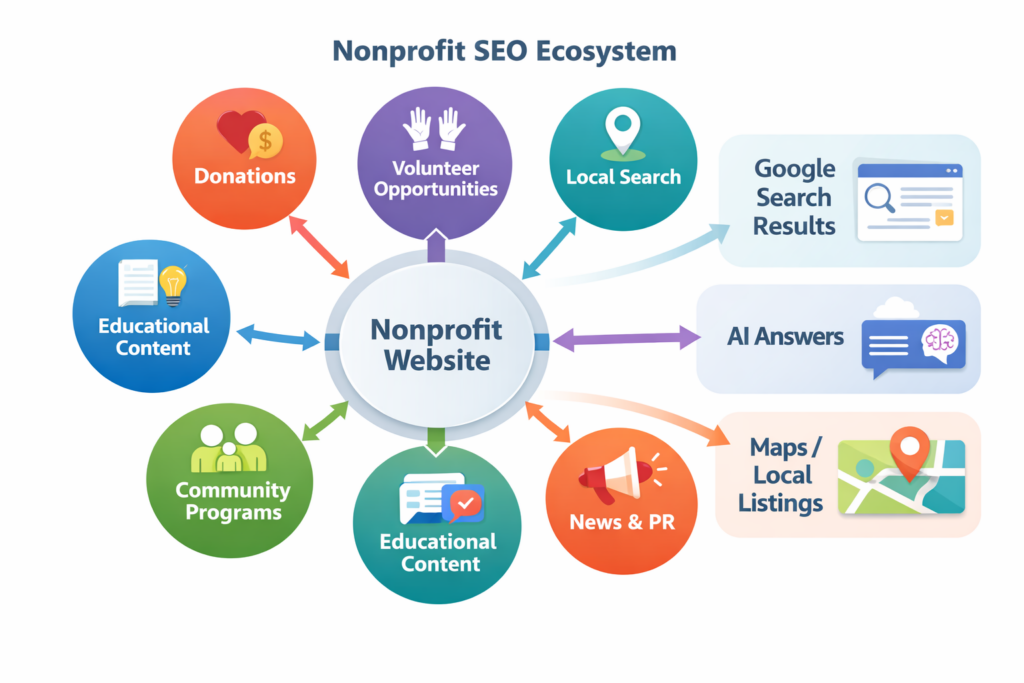
Nonprofit SEO is the practice of optimizing your website, local listings, and content so your organization ranks for mission-driven searches, including donations, volunteer opportunities, programs, and community services.
Unlike commercial SEO, nonprofit website SEO needs to serve multiple audiences (donors, volunteers, beneficiaries, media, etc.), operate within limited budgets, and emphasize trust and transparency.
For local nonprofits, your Google Business Profile (GBP) acts as both a discovery engine and trust signal, so you can be found for searches like “food bank near me” or “volunteer opportunities in [your city].”
When someone finds your cause page through search, clicks to donate or sign up to volunteer, and completes that action, SEO has directly fueled real-world impact and change you can be proud of.
How Nonprofit SEO Differs From General SEO
Nonprofit SEO strategy differs from the general SEO strategy used by for-profit businesses in several key ways, including:
Multiple audience types such as donors, volunteers, beneficiaries, grantmakers, and journalists
Mission over revenue with conversions that drive impact, not product sales
Google Ad Grants synergy for free Google Ads spend that supports organic growth and improves online visibility.
Higher trust threshold, so E-E-A-T (Experience, Expertise, Authoritativeness, Trustworthiness) is critical
Seasonality with GivingTuesday, year-end campaigns, and disaster relief moments
Transparency signals such as 990 filings, impact reports, and board leadership visibility
As an example, while an e-commerce brand might create a product hub for “running shoes,” a nonprofit would create a cause or program hub like “Homelessness Prevention Programs in San Diego” using relevant keywords. Then, they would link impact data, eligibility information, volunteer opportunities, and donation CTAs.
Why SEO Matters for Nonprofits
Organic search connects intent to action, and when it’s done right it can become one of your most efficient long-term acquisition channels. It’s essential to take it seriously and focus your efforts in the right places.
Drives Targeted Traffic to Your Mission
With cause-related searches like “donate to animal rescue near me,” “free meals [your city],” or “volunteer opportunities this weekend” you can lead searchers directly to program pages, donation forms, or volunteer sign-ups.
Boosts Local Visibility and Community Recognition
For many nonprofits, the Map Pack drives a significant share of visibility due to branded demand. For example:
Branded demand: “[Organization Name] reviews”
Non-branded demand: “food bank near me”
If you’re not visible for “[cause] near me,” someone else is, and even nonprofits can have some strict, significant competition to deal with.
Builds Trust, Credibility and Donor Confidence
Search visibility reinforces legitimacy, with key trust drivers including Google reviews, 990 transparency, leadership bios, impact metrics, and press mentions, all of which support stronger search engine rankings. It’s also wise to add sticky “Donate Now,” “Volunteer,” and “Learn More” buttons across program and impact pages to make it easier for searchers and improve user engagement.
Know Your Nonprofit Supporter Types First
SEO only works when you understand who’s searching and why, so it’s crucial to know the supporter types you’re targeting with your SEO efforts and how each target audience searches.
“Donor Dana”
Queries:
“best charities for [cause]”
“[Organization Name] reviews”
“tax deductible donations [cause]”
Donor Dana needs impact data, financial transparency, a seamless donation flow, and recurring giving options.
“Volunteer Vic”
Queries:
“volunteer opportunities near me”
“[cause] volunteer [city]”
“weekend volunteer work”
Volunteer Vic needs clear volunteer pages, an event calendar, location info, and time commitment expectations.
“Beneficiary Beth”
Queries:
“free [service] near me”
“food bank [city]”
“low-income assistance programs”
Beneficiary Beth is looking for your help, and needs your service hours, the eligibility criteria, clear contact info, and multilingual access when relevant.
Simple Journey Maps
Creating journey maps for your personas can help you know which direction to guide anyone who finds your site or reaches out to you. For the three personas above, these maps might look like:
Donor: Cause search → Impact page → Donate → Confirmation → Stewardship email
Volunteer: “Near me” search → Volunteer page → Sign-up → Onboarding
Beneficiary: Service search → Program page → Eligibility → Contact or visit
Understand Search Intent to Align Content With Mission-Driven Demand
Not all searches are equal, and your nonprofit’s content marketing needs to match intent or it’s going to fall flat.
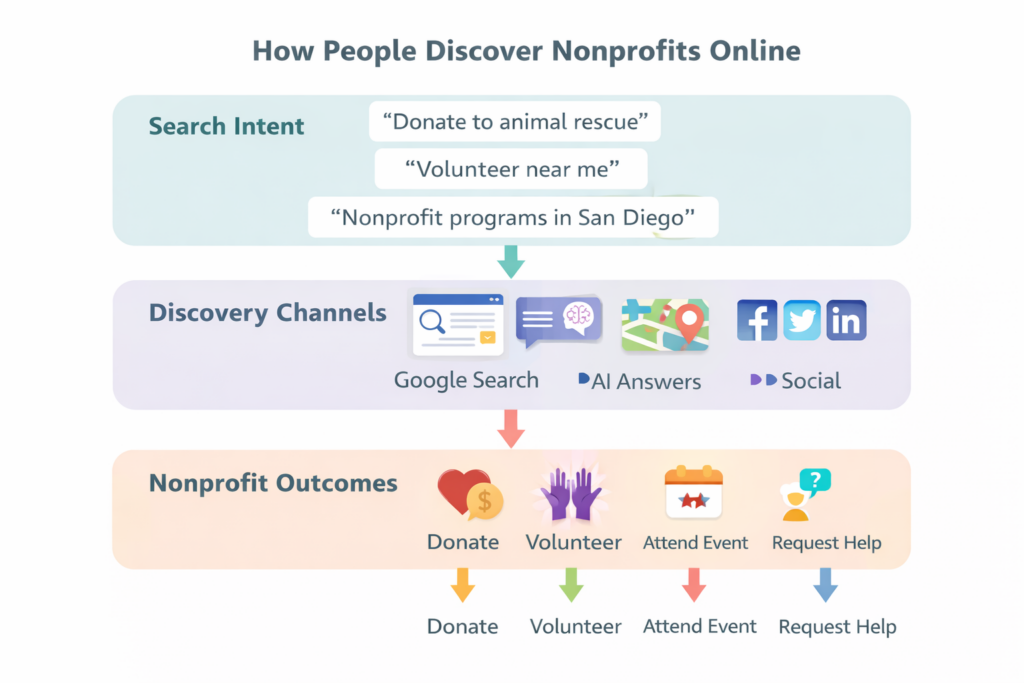
The Four Search Intent Types for Nonprofits
Informational
Query: “how to help homeless in [your city]”
Content: Educational blog posts, impact reports
CTA: Subscribe, learn more
Navigational
Query: “[Organization Name] annual report”
Content: About, reviews, financials
CTA: Donate or volunteer
Transactional
Query: “donate to [cause] near me”
Content: Donation pages, event registration
CTA: Give, sign up
Commercial
Query: “best nonprofits for [cause]”
Content: Comparison-style program pages, testimonials
CTA: Explore programs, donate
Content Cluster Framework
A strong nonprofit SEO strategy relies on hierarchy and internal linking to ensure everyone who finds their way to your page can navigate to the information they’re looking for.
Core Structure
Mission hub: About → impact overview → leadership → 990 transparency
Cause or program hubs: Individual program pages → local service pages → CTAs
Blog or resource hub: Educational content → seasonal campaigns → events
Volunteer hub: Opportunity types → location pages → sign-up forms
A cluster example might look like this:
Mission → Programs → Impact
Blog → Cause Education → Campaigns
Volunteer → Opportunities → Sign-Up
All your internal links should consistently drive toward donation and volunteer conversion pages.
Keyword Research Strategies for Nonprofit SEO
The keywords you’re using are another vital part of your SEO strategy, and you’ll want to choose high-value groups to bring in more engagement and drive more organic traffic. You will want to use keyword research tools to conduct keyword research and track keyword rankings over time.
High-Value Keyword Groups
Cause core (“animal rescue [city]”) – Medium volume
Donation intent (“donate to [cause]”) – High value
Volunteer intent (“volunteer opportunities [city]”) – Medium
Program/service (“free meals [city]”) – Medium
Event/campaign (“charity run [city]”) – Seasonal
Educational (“facts about [issue]”) – Top-funnel
Branded + reviews (“[Org Name] reviews”) – High trust
Tools and Process
The main tools you’ll want to consider are Google Keyword Planner (via Ad Grants), Google Search Console query mining, Semrush/Ahrefs free tiers, AnswerThePublic, and Google Analytics (for performance review).
Then, focus on your workflow, which should look something like this: Mission terms → Add location + intent modifiers → Map to page types → Prioritize by conversion value and competition.
Long-Tail Opportunities
You’ll also want to use long-tail keywords, as these can help searchers find your site more organically. Some examples include:
“where to donate winter coats [city]”
“monthly giving programs [cause]”
“free after-school tutoring [city]”
“corporate volunteer partnerships [city]”
“environmental cleanup events near me”
Long-tail keywords often convert better and face less competition, so finding the right ones can strengthen your SEO campaign and lift search rankings.
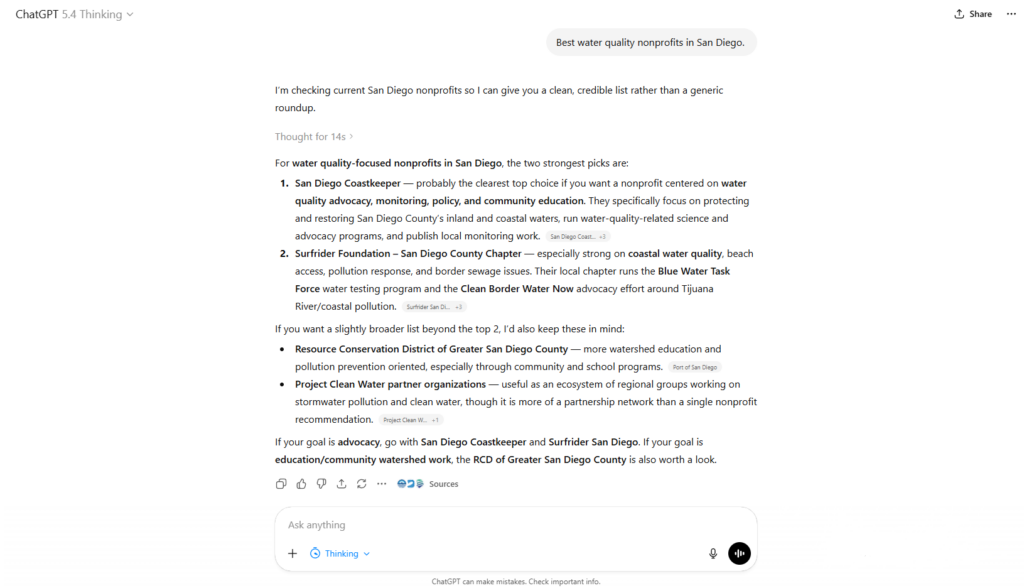
Leveraging Google Ad Grants for SEO Synergy
Google offers numerous ways for your nonprofit to grow, and one of the ways they do that is through ad grants.
What Are Google Ad Grants?
Google offers eligible 501(c)(3) nonprofits up to $10,000/month in free search advertising. While you must meet eligibility requirements and maintain compliance standards, this is a great way to increase your ad campaign without cost.
How Google Ad Grants Complement Organic SEO
When you use Google Ad Grants you can target competitive terms via ads and test keyword performance before any SEO investment. You’ll also have the opportunity to drive traffic to new pages while your rankings build and use ad data (clickthrough rate, conversions, etc.) to inform your content priorities.
Compliance Essentials
To stay in compliance with the Google Ad Grants program, you’ll need to:
Maintain 5% clickthrough rate (CTR)
Avoid overly generic keywords
Track conversions
Geo-target appropriately
Use relevant landing pages
Optimizing Your Google Business Profile (GBP)
Your Google Business Profile is extremely important, and to make sure you’re optimizing your profile as much as possible, there’s a checklist you can follow.
Essential GBP Checklist
Correct primary category (“Nonprofit Organization”)
Complete address and service area
Accurate hours
Photos of team and programs
Services list
Mission-focused description
UTM-tagged website link
Volunteer sign-up link
Regular posts
Q&A section populated
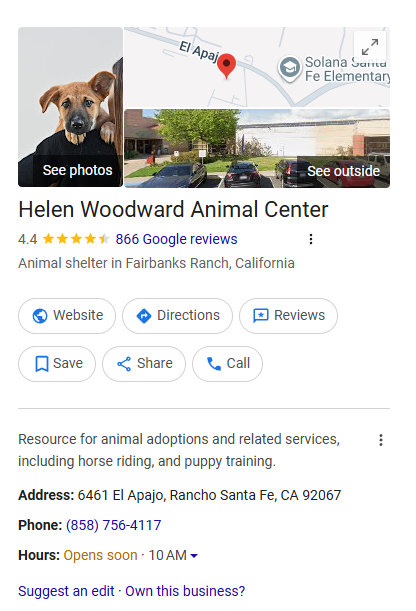
Review Generation Tactics
To generate reviews that boost your organization’s name in search, consider sending post-event review emails, providing QR codes at events, offering board member testimonials, and adding social prompts after milestones.
Be sure to respond to reviews, too. You don’t have to say a lot. For example, you could use a positive response template like: “Thank you for supporting our mission to [impact statement]. We’re grateful for your involvement.”
NAP Consistency
Many companies don’t rank in search because of Name, Address, and Phone (NAP) mismatches, but you can avoid that by having a consistent NAP across:
GuideStar/Candid
Charity Navigator
State nonprofit registry
Chamber of commerce
Cause directories
On-Page SEO: Fine-Tuning Your Nonprofit Website
As you work on the fine-tuning of your organization’s website, one of the biggest goals is providing URLs that are SEO friendly, along with titles and meta descriptions to help you get found.
SEO-Friendly URLs
Good examples of SEO-friendly URLs include:
/programs/[program-name]/
/donate/
/volunteer/[type]/
/events/[event-name]-2026/
Donation and volunteer pages should be within one to two clicks sitewide, to make it easier for visitors to your page to get started in these areas.
Title and Meta Templates
You’ll want to keep titles between 50-60 characters and metas around 150 to 160 characters to ensure they display properly in search results. For templates, consider using the following as a guideline.
Page Type | Title Template | Meta Template |
Program | [Program Name] – [Cause] in [City] | Learn about our program serving [city]. See impact data and how to help. |
Donation | Donate to [Cause] | Your gift supports [impact]. Donate today. |
Volunteer | Volunteer Opportunities in [City] | Join volunteers making a difference in [cause]. |
Event | [Event Name] [Year] in [City] | Register for our annual event supporting [cause]. |
Image SEO for Nonprofits
Image SEO also matters, but a lot of companies and organizations forget that they can add text to the pictures they put on their site. A common alt text pattern might look like [Program Name] – [Description] – [City] [Year], but there are other options you can use, as well. Remember to use authentic images (with consent), compress files, and lazy-load, so visitors aren’t stuck waiting on your site to load up for them.
Crafting High-Quality Content for Nonprofits
While SEO is extremely valuable in getting searchers to your site, the content you provide has to keep them there. That’s why quality content matters, and you want to be sure visitors see the value in your mission and vision.
Funnel-Based Content Strategy
There are several funnels you can use when creating content, allowing you to focus on which part of the funnel the visitor is in at the time. Common funnels include:
Awareness: Cause education and local impact data
Consideration: Program deep-dives and testimonials
Decision: Annual reports and leadership bios
Action: Optimized donation and volunteer landing pages
Conversion-Focused Pages
When you move to pages that are designed to convert, you want to ensure they have the right information. For example, your donation page checklist might include:
Suggested amounts with impact labels
Recurring giving option
Trust badges
Minimal form fields
Mobile device optimized
For a volunteer page checklist, consider including:
Clear time commitments
Location details
Simple sign-up form
Testimonials
SEO Content Best Practices
To meet best practices for your content, remember to use the primary keyword in H1, add internal links to donate or volunteer, including the schema markup (NonprofitType, Event, FAQPage), focus on freshness updates, and add alt text on all images using keywords relevant to each program.
Building a Robust Backlink Profile
Backlinks help add authority to your site, so it ranks higher in search and visitors know it can be trusted.
Why Links Matter
To increase trustworthiness, consider quality links from the local news, partner organizations, the government (.gov), universities (.edu), and community foundations. Nonprofits have a natural advantage due to mission-driven storytelling, so don’t let that go to waste.
Link-Building Strategies
For link-building strategies, consider the following:
Pitch impact milestones (Medium difficulty)
Publish annual data reports (Low)
Partner with universities (Medium)
Sponsor events (Low)
Create community studies (High)
Prioritize relevance, authority, and contextual placement for higher chances of success.
Local SEO Techniques to Dominate Your Service Area
Not only do you want searchers to find you, but you want to use local SEO for searchers in your area to strengthen your nonprofit’s online presence.
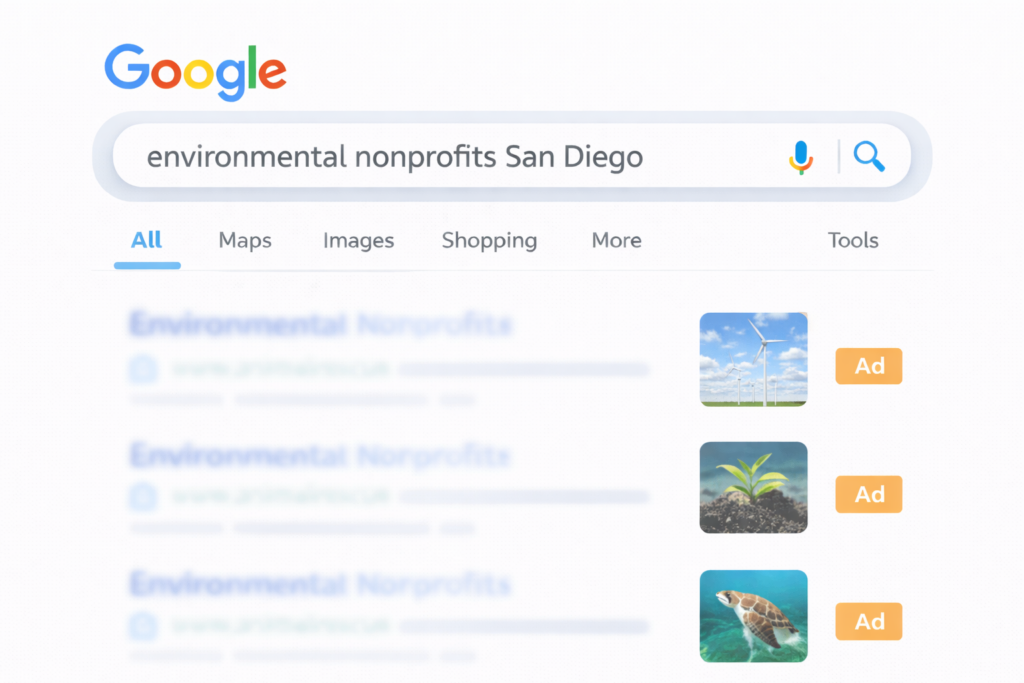
Location-Specific Landing Pages
For location-specific landing pages, include local mission context, a service map, impact stats, and a clear CTA. Then, add LocalBusiness + Nonprofit schema.
Citation Priorities
GuideStar/Candid
Charity Navigator
Great Nonprofits
IRS Tax Exempt Search
VolunteerMatch
Google Business Profile
Bing Places
Keep NAP consistent everywhere, as that makes it easier for your organization to be found in as many places as possible, and also helps with credibility.
Mobile Optimization Checklist
Optimizing for mobile is vital because so many people use their phones for search. Make sure your mobile-optimized site has a responsive design, fast load times, and a click-to-call option, along with a sticky donation CTA and WCAG accessibility compliance.
Technical SEO for Nonprofit Websites
The technical side of SEO can feel confusing, but it doesn’t have to be. At NextLeft, we can provide a free audit of your SEO to help determine where it might be falling short or need additional focus. That can help you take your nonprofit to the next level.
Architecture
A shallow hierarchy may look like: Mission → Programs → Local pages, but you need more than that for success. Also consider:
XML sitemap
Canonical tags
Pagination for blogs/events
Core Web Vitals
When you compress images, defer non-critical JS, reduce plugin bloat, and monitor mobile performance, you’ll see where the issues lie on the technical side. Additionally, affordable hosting upgrades can dramatically improve load speed, and that means happier visitors who may be more likely to get involved.
Structured Data
For structured data, be sure you’re including:
NonprofitType
Event
FAQPage
DonateAction
Breadcrumb
Measuring Your Nonprofit SEO Success
Even if you feel like you’re doing everything right, you can’t know that without measuring your success. That includes not only the metrics you need to look at but also the tools that help you discover what you need to know.
Key SEO Metrics Tied to Impact
Donation conversions (one-time + recurring)
Volunteer sign-ups
Event registrations
Email growth
GBP actions
One of the biggest pros tips in this area is to remember to track branded vs. non-branded traffic splits.
Tools and Dashboard Essentials
GA4
Google Search Console
GBP Insights
Google Ad Grants reporting
CRM integration
Monthly Optimization Routine
Every month, make sure you’re staying optimized. To do that, review keyword gains and losses, evaluate your donation conversion rates, and analyze the performance of any campaigns you’re running. Additionally, take the time to compare Ad Grants vs. organic, to see which is providing you with the biggest value and whether you need to adjust your keywords going forward.
Remember, nonprofit SEO isn’t about gaming search engines, but about aligning your digital presence with your mission so you appear more often on search engine results pages. When someone searches for help, hope, or a way to give back, your organization should be there.
If you’re looking for a customized nonprofit SEO strategy, schedule a strategy call with us at NextLeft and explore our downloadable checklist. We’re here to help your nonprofit get the support it needs to continue giving back to others.
FAQs About Nonprofit SEO
Still have questions? These are some of the most commonly asked ones.
What’s the best way to start?
Optimize your Google Business Profile, fix program page titles, request reviews, and apply for Google Ad Grants.
Can we do SEO ourselves?
Yes to a point, especially with basics like GBP, on-page optimization, and content, but a knowledgeable partner helps accelerate strategy and technical execution.
How long until we see results?
You should see results in 30 to 60 days for local visibility improvements and in 3 to 6 months for broader organic growth.
How do we measure ROI if we’re not revenue-focused?
You can measure ROI if you track mission-aligned conversions such as donations, volunteer hours, and program inquiries.
How important are reviews?
Reviews are critical, as they directly influence trust, Map Pack rankings, and donor confidence.